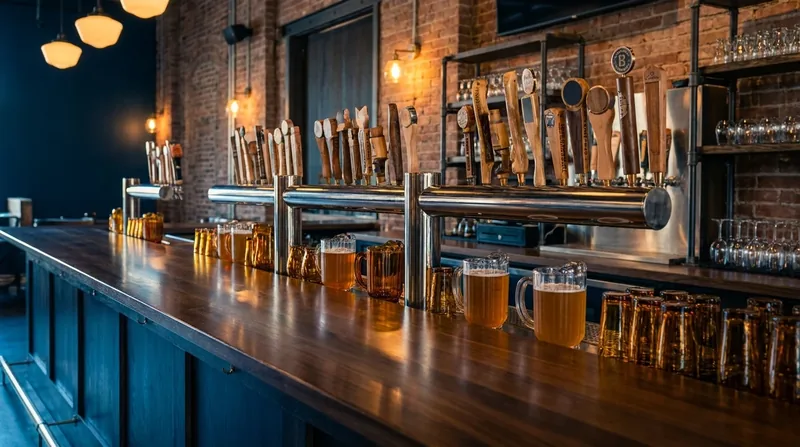
Alaska Liquor License: Types, Fees and AMCO Steps
Last verified: November 16, 2026
This guide is for you if you plan to apply for a new Alaska liquor license or buy an existing one: a bar, a restaurant, a package store, a lodge or a producer. AMCO, the Alcohol and Marijuana Control Office in the Department of Commerce, Community, and Economic Development, takes the application. AMCO describes approval as coming from the Alcoholic Beverage Control Board, the local government and other state agencies, and tells new and transfer applicants to plan for 4 to 6 months (AMCO application page, archived October 6, 2026). Entity filings go to the Corporations Section of the Division of Corporations, Business and Professional Licensing, which is a separate step (Division of Corporations page, archived October 13, 2026).
Opening a bar? Our guide to starting a bar or tavern in Alaska covers the venue side. Making beer, wine or spirits? See the brewery, distillery and winery guide. This page covers what every applicant shares: license types, the fee table, availability, the local protest window and buying a license.
Our position, reasoned from the regulations below and not an AMCO instruction: the license is the scarce item, not the LLC. 3 AAC 305.040 has the board deny an application when no license of that type is available, so check availability and local rules first, form the entity second and sign a lease last. The application still needs proof of your right to the premises, so ask an Alaska attorney what kind of lease or option fits.
This guide is informational content, not legal or tax advice. Alcohol licensing is a regulated area with local rules, and buying or leasing a premises tied to a license is a large commitment. Talk with an Alaska attorney and a CPA before you sign anything.
The short version
- You file with AMCO. A new application must include your state business license number, and for an LLC the articles of organization or operating agreement plus a statement that the LLC is in good standing (3 AAC 305.045).
- Fees paid with a new application: $500 application fee (non-refundable), the biennial license fee for your type, and $50 per person for fingerprints. Renewal applications cost $300 (3 AAC 305.145; AMCO (archived October 6, 2026)).
- In Alaska the number of some licenses depends on a community's population, and AMCO denies an application when none is available (3 AAC 305.040).
- The local governing body has 60 days after it receives the board's notice to protest, and the board does not act before that period ends (3 AAC 305.085).
- Plan for 4 to 6 months for a new or transfer application, and know that AMCO examiners cannot approve or expedite one.
License types AMCO issues
Alaska sorts alcohol licenses by where and what you serve or sell. The grouping below follows 3 AAC 305.300, which says which license is required for each kind of sale. Pick the group that matches your operation before you look at premises, because a beverage dispensary license and a restaurant or eating place license do not cover the same drinks.
| What you do | License types (3 AAC 305.300 and 305.145(d)) | What the regulation says |
|---|---|---|
| Serve any alcoholic beverage for drinking on the premises | Beverage dispensary, club, theater held by a beverage dispensary licensee, common carrier dispensary, destination resort, beverage dispensary tourism | A license is required to sell or serve alcoholic beverages for consumption only on the licensed premises (305.300(a)) |
| Serve beer and wine for drinking on the premises | Restaurant or eating place, pub, theater held by a restaurant licensee, sporting activity or event, fair, golf course, seasonal restaurant or eating place tourism | Brewed beverages or wine only (305.300(b)) |
| Sell for drinking on and off the premises | Brewery retail, winery retail, distillery retail | Store, sell or serve for consumption on and off the premises (305.300(c)) |
| Sell sealed containers for drinking elsewhere | Package store | Store and sell for consumption off the licensed premises (305.300(d)) |
| Ship to Alaska customers | Manufacturer direct shipment | Sale in response to an order for shipment to a person in Alaska for personal use, not for resale (305.300(e)) |
| Make beer, wine or spirits, or wholesale | Brewery, winery and distillery manufacturer; general wholesale; limited wholesale brewed beverage and wine | Listed in 305.145(d); the privileges are in Articles 2 and 4 of 3 AAC 305, which this guide does not summarize |
| Run an outdoor lodge | Outdoor recreation lodge | Listed in 305.145(d)(18); we did not read its privileges, so ask AMCO |
One comparison worth making early: AMCO's fee table below lists a restaurant or eating place license at half the fee of a beverage dispensary license, but the restaurant license covers brewed beverages and wine only. Whether a license of either type is available where you want to operate is a separate question, covered next.
What it costs: application fees and related charges
Alcohol licensing has several cost layers. Keep them separate in your budget, because 3 AAC 305.045 requires the application fee and the license fee to come in with a new application, not after approval.
| Item | Amount | Source or note |
|---|---|---|
| Application fee, new license or transfer | $500, non-refundable | 3 AAC 305.145(a); same figure in the AMCO fee table |
| Application fee, renewal | $300, non-refundable | 3 AAC 305.145(b) |
| Fingerprints | $50 per person, per fingerprint card | AMCO application page, archived October 6, 2026 |
| Paper application | $150 extra when the form could have been filed through AK-ACCIS | AMCO page, since October 25, 2024 (3 AAC 305.165(10)) |
| Late renewal fee | $500 | AMCO fee table; reinstatement of a license is $1,000 |
| Biennial license fee | $200 to $2,500 by license type | Table below |
| State business license | $50 for one year or $100 for two years | Business Licensing forms and fees, archived November 15, 2026 and 12 AAC 12.010 |
| LLC articles of organization | $250 ($350 for a foreign LLC) | Division forms and fees page, archived August 9, 2026. The regulation, 3 AAC 16.065(a), still lists $150 for the LLC filing. Confirm the amount with the Division before you pay. |
| Biennial report, LLC | $100 (foreign LLC $200) | Division forms page, archived August 9, 2026. Due before January 2 of the filing year and delinquent if not filed before February 1 (AS 10.50.760). The Initial Report has no fee. |
| Biennial corporation tax, corporation | $100 domestic, $200 foreign | AS 10.06.845, in the Division statutes and regulations compilation (Rev. 6/26/2026, archived November 10, 2026); due before January 2 of the filing year |
The license fee is biennial under 3 AAC 305.145(d), which points to the fee set in AS 04.09 for each type. AMCO's fee table (archived October 6, 2026) lists each type with a year-round fee and a seasonal fee; ask AMCO how a seasonal fee applies to your operation.
| License type | Year-round fee | Seasonal fee |
|---|---|---|
| Beverage dispensary | $2,500 | $1,250 |
| Beverage dispensary tourism | $2,500 | $1,250 |
| Destination resort | $2,500 | $1,250 |
| Outdoor recreation lodge | $2,500 | $1,250 |
| Package store | $1,500 | $750 |
| Club | $1,500 | $750 |
| Brewery manufacturer, brewery retail | $1,250 each | $625 each |
| Distillery manufacturer, distillery retail | $1,250 each | $625 each |
| Winery manufacturer, winery retail | $1,000 each | $500 each |
| Restaurant or eating place; pub; theater; fair; golf course; sporting activity or event | $1,250 | $625 |
| Seasonal restaurant or eating place tourism | Not applicable (already seasonal) | $1,250 |
| General wholesale | $2,000 | Not listed |
| Limited wholesale brewed beverage and wine | $400 | Not listed |
| Manufacturer direct shipment | $200 | Not listed |
| Common carrier dispensary | Priced by airline or by community served, see AMCO's table | Set individually |
Our arithmetic from those figures, for a first budget line: a new beverage dispensary license at the year-round fee is $500 plus $2,500 plus $50 for each person fingerprinted, which is $3,050 for one person before the business license, entity filings, the public notice and the build-out. A package store comes to $2,050 on the same basis and a restaurant or eating place license to $1,800. Treat these as the filing floor, not the cost of opening.
The state business license is part of this path. 3 AAC 305.045(c)(8) requires a new-license application to include the state business license number issued under AS 43.70, and the Division says any business engaged in a trade, service or profession must hold one (Obtain a Business License Number, archived November 12, 2026). Our Alaska business license guide covers the application.
Population caps and availability
Alaska ties the number of some licenses to population. For the quota under AS 04.11.400(a)(2), the board uses Department of Commerce, Community, and Economic Development population figures, with prison populations excluded and student and military populations discounted for people domiciled elsewhere; the director sets the figure for incorporated cities and unified municipalities each year (3 AAC 305.900).
A license becomes available when a population increase creates room, 30 days after a notice of expiration for a license that was not renewed (and not later than April 15), when appeals over a denied or revoked license end, or on a date the board or director sets. If no license of the type you apply for is available when AMCO receives your application, the board denies it, subject to the rules for competing applications in 3 AAC 305.100 (3 AAC 305.040). We could not read AS 04.11.400, so which license types are capped, and where, is a question for AMCO. Ask before you sign a lease, a purchase agreement or a build-out contract.
Local protest and zoning
A new, transfer or renewal application can draw a protest from the local governing body. Under 3 AAC 305.085 the protest must be in writing, filed with the board, copied to you, and state reasons that are logical grounds with a reasonable basis in fact. The board does not take final action until 60 days after the local governing body receives its notice, unless that body waives the right in writing, and until 15 days after public notice is complete. A protest that arrives after the 60 days is not accepted, and the local body must give you a reasonable opportunity to defend the application before one of its meetings.
The same section lets a local body protest renewal or transfer over unpaid taxes or fees of at least $1,000 that arose from the licensed business. A community can also prohibit sales by ordinance or election under AS 04.11.491, which the board may weigh when it decides an application (3 AAC 305.110). AMCO keeps an Alcohol Local Option page; check your community's status there.
Public notice is your job, not AMCO's. 3 AAC 305.075 has you post the application for 10 days at the proposed premises and at one other conspicuous public place, and publish an announcement once a week for three consecutive weeks in a newspaper of general circulation (or on local radio twice a week for three weeks), all within the 90 days before you file.
Your city or borough sets the zoning for your address. Get the planning office's answer in writing on whether your license type and use are allowed there. We could not read the alcohol statutes on zoning (AS Title 4 is on akleg.gov, which we cannot open), so also ask AMCO whether state law adds a zoning limit for your license type.
Local business licenses and local taxes
Alaska does not levy a state sales and use tax, but some local jurisdictions do (Tax Division: Sales and Use Tax, archived October 19, 2026). Local rules fill the gap and differ by place, so never assume that a rule in one city applies in another.
- Local business licenses vary by place. Ask the clerk where your premises sits. Fairbanks, for example, asks a business to hold a state business license, a City of Fairbanks business license and a city Certificate of Registration before it opens a city tax account (City of Fairbanks: Sales Tax Registration).
- Local sales tax. Many boroughs and cities levy one, at different rates, so ask the borough or city where you sell about rates, registration and filing. The Alaska Remote Seller Sales Tax Commission publishes a monthly rate sheet for its member jurisdictions at its tax rates page; it covers members only, so it is not a list of every place that taxes. Our rate guide by city and borough and the local sales tax guide explain how to read it.
- Lodging tax. If your license sits inside a lodging operation, ask the borough or city whether a lodging tax applies, and see our lodging tax guide for the places we could source.
Alaska alcohol tax
The Department of Revenue Tax Division lists an Alcoholic Beverage Tax among the taxes it administers (Tax Division tax types, read November 16, 2026). We did not read its rates or due dates, so this guide quotes none; confirm the current rates, return forms and filing dates with the Tax Division. Some cities add their own alcohol tax: the City of Fairbanks lists an Alcoholic Beverage Tax among its city taxes (City of Fairbanks: Sales Tax Information), so check with your local clerk as well. A CPA who works with alcohol businesses can set up your filing calendar and reconcile the state and local obligations.
Buying an existing Alaska liquor license
Many buyers search for an Alaska liquor license for sale because a transfer can be faster than a new application where availability is a problem. Treat that search with care. AMCO's fee table has fees for applications and licenses, not a price for buying one, so any price you see is a private figure set by the buyer and seller, not a government valuation. AMCO's 4 to 6 month planning range applies to transfers as well as new licenses.
Before you pay anything, check these points:
- The license is active and in good standing. AMCO offers a license and permit search through AK-ACCIS, and the seller should give you the license documents and the record of renewals or violations.
- The seller must file a sworn statement listing the business's debts and taxes due, and AMCO notifies each creditor listed (3 AAC 305.060). The board may weigh unpaid debts or taxes unless security is given (3 AAC 305.110), so ask your attorney how the purchase agreement handles them.
- A transfer to another person or to a new location carries the $500 application fee (3 AAC 305.145), and the transferee supplies the same information and fingerprints as a new applicant.
- Public notice and the 60-day protest period apply to transfers too. The board does not reconsider an approved transfer because of a later protest (3 AAC 305.085).
- Zoning at the premises allows the sales you plan, and AMCO confirms that availability is not an issue for your transfer.
Have an attorney review the purchase agreement, and have a CPA review how the price and any liabilities will affect your tax position.
Application steps in order
- Ask AMCO whether a license of your type is available in your community, and check the community's local option status.
- Get the city or borough planning office's written answer on zoning for the address.
- Form your entity if you will not apply as an individual. For an LLC, AMCO asks for the articles of organization or operating agreement and a statement that the LLC is in good standing; our Alaska LLC guide covers the filing, and our comparison of filing yourself and using a formation service helps you choose.
- Get the state business license and note its number, which the application requires.
- Line up documentation of your right to the premises: a deed, lease or similar document (3 AAC 305.045).
- Give public notice within the 90 days before you file: posting for 10 days and three weeks of newspaper or radio announcements.
- File the application, with the $500 application fee, the biennial license fee for your type and $50 per person for fingerprints. Use AK-ACCIS to avoid the $150 paper-form fee.
- Watch for the local protest window and respond to any protest. Plan for 4 to 6 months from filing to a decision.
- After issuance, renew on AMCO's schedule with the $300 renewal application fee, and keep your biennial report current: for an LLC it is due before January 2 of the filing year.
Where to confirm the numbers
- AMCO: the current fee table, license availability and license-type privileges. Start at the AMCO page or write to [email protected].
- Alaska business license and entity filings: the Division of Corporations, Business and Professional Licensing.
- Taxes: the Alaska Department of Revenue, Tax Division, plus your city or borough clerk for local sales, lodging and alcohol taxes.
- Planning help: the SBA district offices page lists the Alaska District. The Alaska Small Business Development Center keeps its own site at aksbdc.org; we could not open it from our server, so check what it currently offers.
Alcohol rules change, and fee amounts are set in statute, regulation and agency schedules. Confirm every figure in this guide with AMCO or the named agency before you budget, file or sign a purchase agreement.
Sources
- AMCO: Alcohol license application and alcohol licensing fees, Wayback snapshot October 6, 2026; AMCO home page (commerce.alaska.gov/web/amco), Wayback snapshot September 23, 2026.
- Alaska Administrative Code on Cornell LII: 3 AAC 305.040 When licenses become available; 3 AAC 305.045 Application for license and endorsement; 3 AAC 305.060 Transfer of a license to another person; 3 AAC 305.075 Public notice; 3 AAC 305.085 Local governing body protest; 3 AAC 305.110 Factors for consideration; 3 AAC 305.145 License and endorsement application and biennial fees; 3 AAC 305.300 License required; 3 AAC 305.900 Population figures; 3 AAC 16.065 LLC fees; 12 AAC 12.010 Business license fees. Read directly November 16, 2026.
- Division of Corporations: Corporations start page, snapshot October 13, 2026; Corporation forms and fees, snapshot August 9, 2026; Corporations statutes and regulations compilation (AS 10.50.760, AS 10.06.845), snapshot November 10, 2026.
- Division of Business Licensing: Obtain a Business License Number, snapshot November 12, 2026; Business Licensing forms and fees, snapshot November 15, 2026.
- Department of Revenue Tax Division: Sales and Use Tax, snapshot October 19, 2026; Tax types, read directly November 16, 2026.
- Alaska Remote Seller Sales Tax Commission: Tax rates, read directly November 16, 2026.
- City of Fairbanks: Sales Tax Registration and Sales Tax Information, read directly November 16, 2026.
- U.S. Small Business Administration: District offices, read directly November 16, 2026.
Disclaimer: This article is informational content, not legal or tax advice. It does not create an attorney-client or CPA-client relationship. For a specific license purchase, transfer, or tax question, consult a qualified Alaska attorney and CPA.