Starting a Business in Rural Alaska: Villages, the Unorganized Borough and the State Licence
Starting a Business in Rural Alaska: Villages, the Unorganized Borough and the State Licence
Starting a business outside Anchorage, Fairbanks or Juneau is less complicated on paper than many people expect, but the local details change from one community to the next. Alaska has no county governments. The state is organized into boroughs and cities, and everything outside them is the Unorganized Borough. Your state filing, your state business license, and your local tax and licensing duties all depend on where your business is physically based. This guide covers the steps for a small rural business, from confirming your location to filing with the state and sorting out local rules.
Informational only: This article is not legal, tax or licensing advice. Rules, rates and deadlines change. The figures here were checked against official Alaska sources in October 2026, but you should confirm each one with the agency or office named before you rely on it. For complex situations, such as multiple owners, alcohol sales, tribal land or sales across city lines, talk with a qualified attorney or CPA.
Step 0: Confirm Which Kind of Place You Are In
Alaska has no Secretary of State. Business filings go to the Corporations Section of the Division of Corporations, Business and Professional Licensing within the Department of Commerce, Community, and Economic Development (DCCED). Your local obligations depend on your community's status:
- Incorporated city: the city may require its own general business license and may levy its own sales tax.
- Borough: cities and boroughs may levy sales tax and bed tax, and the rates differ from place to place.
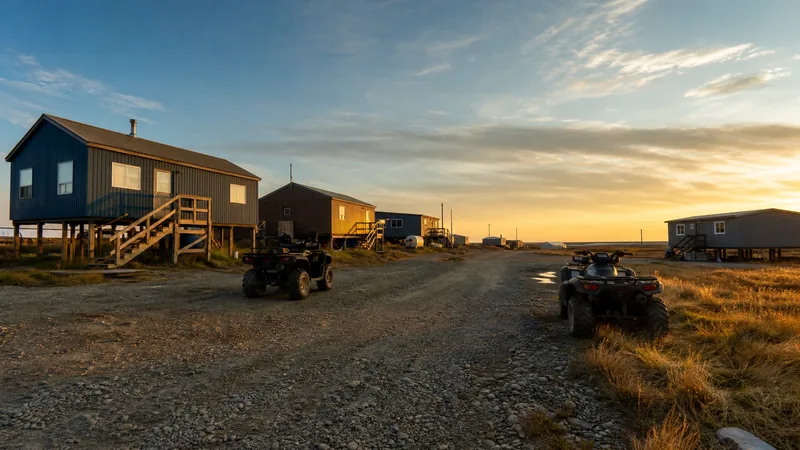
- Unorganized Borough: no borough government exists. About 10% of Alaskans live here: 77,157 of the 733,391 people counted in the 2020 census, or 10.5%. The state business license is usually the only general license. Some small cities inside this area add a sales tax and sometimes their own license.
- Village with a tribal government or village corporation: these organizations can set requirements on top of state and local rules.
Before you do anything else, call the city clerk, or the borough clerk if you live in a borough, and ask two questions: Does the city require a general business license? Does it levy sales tax or bed tax, and at what rate?
What You Need Before You Start
- Your proposed business name, checked against the state entity database
- An Alaska registered agent with a physical Alaska street address and an Alaska mailing address
- A myAlaska account, which you use to log in for online filing
- A federal employer identification number from the IRS, needed for banking and federal tax reporting
- Contact details for the city clerk, any borough office, and any tribal or village corporation office in your area
- A budget for the fees in this guide: $250 to form an LLC or corporation, $25 to reserve a name, $50 (one year) or $100 (two years) for the state business license, and $100 for the biennial report later
Step-by-Step Instructions
- Choose your legal structure. A sole proprietor forms no entity with the state but still needs the state business license. A name other than your own can be registered as a DBA, an optional filing under AS 10.35 that costs $25 (Form 08-557) and renews for $25 (Form 08-560). File it after you have your state license. An LLC or corporation files Articles of Organization (Form 08-0484) or Articles of Incorporation (Form 08-0400), with a $250 filing fee. Alaska has no state personal income tax. An LLC taxed as a partnership or sole proprietorship owes no Alaska income tax on its earnings. A corporation, or an LLC that elects corporate taxation, files Alaska corporate net income tax, graduated from 0% to 9.4%. Ask a CPA which structure fits your situation.
- Check and reserve your name. Search the entity database at commerce.alaska.gov before you commit to a name. An LLC name must include Limited Liability Company, LLC or L.L.C. (Limited may be shortened to Ltd. and Company to Co.). An LLC may not use Inc. The name must be distinguishable from names already on record under 3 AAC 16.120(a). Adding an entity identifier such as LLC or Inc. does not make a name distinguishable. To hold a name while you gather documents, reserve it for 120 days for $25.
- Appoint a registered agent with a real address. Every registered entity must continuously maintain a registered agent and a registered office with both a physical Alaska street address and an Alaska mailing address. The agent can be an Alaska resident or an authorized business, including attorneys and law firms. An LLC cannot serve as registered agent, and no entity can be its own. This is where many rural applicants stall, because some villages have no street addresses. If your community has none, plan on an agent in a town that does, and confirm the address with the Corporations Section before you file. A change of agent requires a Statement of Change (Form 08-409, $25). You cannot make that change on the biennial report.
- File online. Online filings post immediately. Paper filings take 10 to 15 business days from March through September and longer than 15 business days from October through February. The Division publishes no expedited service, so online filing is the fastest path. Use the online filing instructions, which are reached from the Corporations page.
- Get your state business license before you operate. Alaska requires a state business license under AS 43.70 before you engage in business activity in the state. It costs $50 for one year or $100 for two years (Form 08-4181 for a new application, Form 08-4617 to renew). The only endorsement is a $100 per location tobacco endorsement, and a telemedicine business registration costs $100. Occupations regulated under AS 08 also require a professional license. This license is separate from forming your entity, even though the same Division issues both.
- Confirm local licensing and sales tax. Some cities require a general business license and others do not. Anchorage, Ketchikan and Homer do not. Local sales tax rates are set by each place. These 2026 ARSSTC rates show how much they vary: Bethel 6% general and 15% on alcohol, Nome 6%, Kotzebue 6% with alcohol also at 6%, and Unalaska 3%. Treat these as examples only. Confirm your city's current rate with the city clerk or the Alaska Remote Sellers Sales Tax Commission (ARSSTC) before you charge anything. If you rent rooms or cabins, ask about bed tax separately.
- Check alcohol rules early. Dry and damp communities restrict alcohol sales or imports, and those rules can limit what you stock, serve or bring in. Check the AMCO local option list before you buy, order or sell any alcohol, and confirm the result with the city clerk.
- Contact tribal and village corporation offices. Tribal governments and village corporations may have their own requirements for doing business on their lands, including permits or agreements. These sit alongside state and local rules, so ask before you sign a lease or set up on their land.
- Calendar the biennial report. LLCs and corporations file a biennial report every two years, not an annual one. The fee is $100, due January 2. Entities formed in an even-numbered year report in even-numbered years, and entities formed in an odd-numbered year report in odd-numbered years. A no-fee initial report is due within 6 months of formation. Late penalties apply after February 1.
- Plan around mail and air freight. Build your filings, renewals and records around online tools rather than paper. Keep digital copies of your entity filing, your state license, your registered agent agreement and every receipt. Allow extra lead time for supplies, equipment and signage that arrive by air cargo, barge or mail.
Common Mistakes to Avoid
- Using Inc. in an LLC name. The name must carry LLC, L.L.C. or a permitted abbreviation.
- Assuming the state business license covers city rules. It does not replace a local license or local sales tax registration.
- Assuming Alaska has a statewide sales tax. It does not, but many cities and boroughs levy their own.
- Naming an LLC as your registered agent, which the rules do not allow.
- Mailing paper filings from a remote community and waiting weeks in the queue when online filing posts immediately.
- Missing the initial report, or filing the biennial report in the wrong year.
- Stocking or selling alcohol before checking the local option status of your community.
- Assuming a village corporation or tribal office has no rules because the state has none.
What to Expect When You Finish
Many owners who complete these steps end up with a clear record: a name on file, a registered agent, a current state license and a written list of local rules. Online filings may be on record the same day you submit them. Local licensing and tax registration can take longer and depend on your city. Many first-time owners find that the first year takes the most effort, because they are building a compliance calendar from scratch. These outcomes are not guaranteed, and your results will depend on your business type and location.
When to Get Professional Help
Talk with a qualified attorney or CPA if you have multiple owners, plan to sell alcohol, operate on tribal or village corporation land, sell across city lines, or run a seasonal business with irregular income. The Alaska Small Business Development Center and the SBA Alaska district page both list local resources you can contact.